What Is the Difference Between Steam and a CD Key?
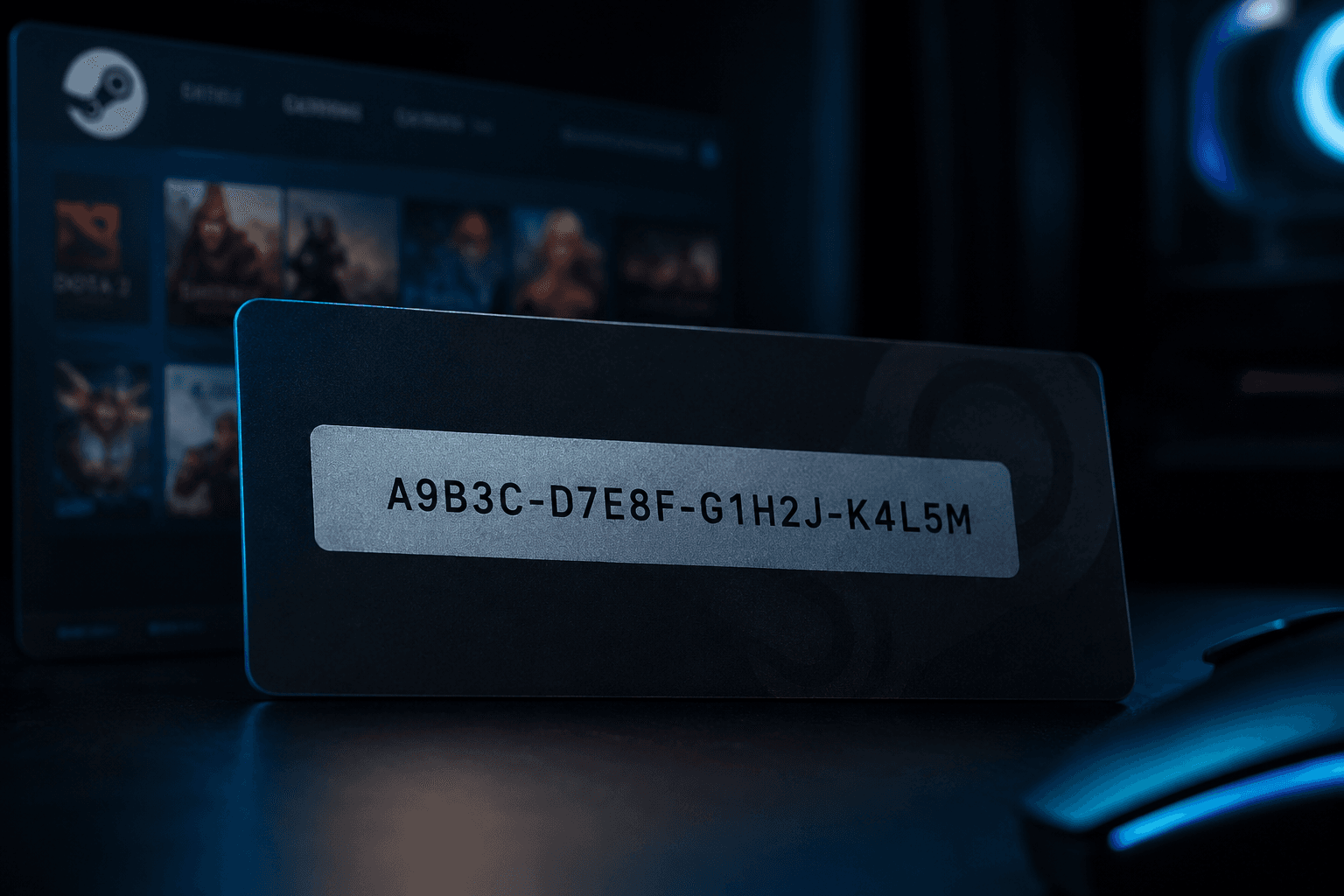
This question comes up constantly from people who are newer to PC gaming, and the confusion is understandable. The terminology has been muddy for years. The short version: a Steam key is a specific type of CD key. It is a code that activates a game on Steam specifically. A CD key is the older, broader term for any activation code used to unlock a piece of software, including games, going back to the days of physical discs. The two terms overlap significantly and are often used interchangeably, which is part of what makes it confusing.
The practical difference that matters today is about where the key activates. A Steam key goes into Steam. A key for a different platform, whether that is GOG, Epic, the Xbox app, or a publisher's own launcher, goes somewhere else. Knowing which you have tells you which platform to open before trying to redeem it.
What a CD Key Originally Was
CD keys came from the era of physical game discs. When you bought a game in a box, there was a sticker inside the case with a code printed on it. You entered that code during installation to prove you had a legitimate copy rather than a pirated disc. The key was tied to the game's own DRM system, not to any external platform. Each publisher handled it differently. Some required internet verification. Some checked against a local database on the disc. Some did nothing more than confirm the format of the entered string matched a valid pattern.
Those keys lived and died with the game's own servers or disc-based verification. If the publisher shut down the authentication servers, the key became useless. This happened with thousands of older titles when publishers were acquired, went under, or simply decided not to maintain the infrastructure anymore. It was a significant problem for people who wanted to revisit games they had bought legitimately.
That model has largely been replaced by platform-based activation, where your purchased game is tied to an account on a service like Steam rather than to a standalone code. The account approach is more resilient because the game stays in your library as long as the platform exists, rather than depending on a specific authentication server staying online.
What a Steam Key Is
A Steam key is a CD key specifically formatted for and issued by Valve for use on Steam. It looks like most other activation codes: five groups of five alphanumeric characters, such as XXXXX-XXXXX-XXXXX-XXXXX-XXXXX. When you enter it on Steam through the "Activate a Product on Steam" option or via the Steam website, Valve's system checks it against their database, marks it as used, and permanently adds the associated game to your Steam library.
The game you unlock is then part of your Steam account. You can download it on any machine you log into with that account. You can play it anywhere Steam is installed. The key itself no longer has any function once redeemed. What matters from that point is the account, not the code.
Steam keys are issued to publishers when they release a game on Steam. Publishers then distribute those keys however they choose: through their own website, through retailers like Humble Bundle and Fanatical, or bundled with hardware. The key is just a token that converts into a Steam library entry. Whether you bought it from Steam directly or from a third-party retailer, the result in your account is identical.
Where CD Key Is Still Used as a Term
The term CD key survives in modern gaming in a few specific contexts, and knowing these helps avoid confusion when you see it on a key seller's website.
Some older games, particularly those released before Steam's dominance, still use standalone CD keys that activate through the game's own system rather than a platform. These are increasingly rare for new purchases but come up regularly in discussions about older titles, particularly those that pre-date Steam by several years. Games from the mid-2000s on disc often fall into this category.
Some publishers still issue keys for their own launchers that technically function as CD keys without being Steam keys. A key for a game on Ubisoft Connect, EA App, or Battle.net is sometimes referred to informally as a CD key even though there is no disc involved and the key activates through that publisher's platform. The terminology is imprecise but widely used. When you see "CD key" on a site like CDKeys.com, it usually means a platform-specific activation code for whatever platform is listed alongside it.
The Platform Matching Problem
The most common mistake people make when buying keys is buying a key for the wrong platform. This happens more than you might expect, particularly on sites that sell keys for the same game across multiple platforms. A key listed for Steam will not work on Epic. A key listed for Epic will not work on GOG. The platform the key is for is non-negotiable and there is no way to convert a key from one platform to another.
A few things to always check before buying a key from any site:
✓ Which platform is the key for? This should be clearly stated. If it is not, do not buy until you have confirmed it.
✓ Is the key for your region? Some keys have regional restrictions and will not activate on an account registered outside the intended market. This is more common with grey market purchases.
✓ Is the game available on your preferred platform? Some titles are exclusive to specific storefronts. Buying a Steam key for a game that is Epic exclusive is impossible because no Steam key exists. Check the game's availability first.
For a deeper look at what to watch for when purchasing keys from third-party sources and which sites handle this reliably, our guide on buying game keys safely covers the risks around grey market sellers and which retailers consistently deliver legitimate codes.
Steam vs GOG: A Key Distinction Worth Understanding
The difference between a Steam key and a GOG key is not just about which platform you use. GOG is a DRM-free platform. Games you activate on GOG can be downloaded directly as installer files and run without the GOG launcher being open. There is no DRM verifying your ownership each time you play. That means a GOG key unlocks the game in a way that makes it truly yours, independent of whether the platform remains operational.
Steam keys come with Steam's DRM unless the publisher has specifically opted out of it for their game. For most Steam games, the platform needs to be running in online mode or the game needs to have been enabled for offline mode while you were last connected. This is not a significant burden for most people, but it does mean your library is dependent on Valve's servers remaining operational and your account remaining accessible.
For people who care about long-term game ownership and preservability, GOG keys are often a deliberate choice over Steam keys. For people who prioritise a large library with social features, Steam wins by a significant margin. Neither position is wrong. They reflect different priorities.
Do CD Keys Still Come on Discs?
Rarely for PC gaming. Physical PC game releases have become almost extinct in the UK market. When they do appear, they typically contain nothing more than a code card inside the box pointing to a Steam or similar key, rather than any actual game data on the disc. The disc format for PC games is functionally dead, which makes the term CD key increasingly anachronistic. A better term would be activation code or product key, but CD key has stuck around in the vocabulary of PC gaming despite the discs being gone.
Console gaming still ships physical media that contains actual game data, but that is a different ecosystem. For PC specifically, if you see a "physical copy" of a game, check carefully whether it includes an actual disc with content or just a box with a download code inside. The latter is common and means you are essentially paying for packaging.
How This Connects to Understanding Your Platform Setup
Knowing the difference between Steam keys and CD keys matters most during the early setup of a gaming PC, when you are sorting out which platforms to install, which accounts to create, and where your existing games live. For a first gaming PC build, installing Steam is almost always one of the first steps after Windows. Understanding how keys activate on it and how they differ from other platform keys means you are less likely to make an annoying and avoidable purchase mistake.
If you are still figuring out the software side of a new build, understanding how software activation works more broadly is helpful context. Our piece on how game keys activate walks through the activation process on each major platform with the specific steps needed, which is a useful reference before buying keys for a new system. And if you are also sorting out your Windows licence situation as part of the same setup, our article on Windows licence types covers OEM versus retail and what the transfer rules mean practically.
Getting the Software Budget Right
Games add up faster than most people budget for when planning a new PC. Steam sales help. Game Pass helps. But if you are buying keys one by one at close to full price, the software spend over a year of gaming can rival what you spent on a mid-range GPU. This is worth thinking about when you are planning a total gaming PC budget rather than just the hardware costs.
A solid approach is to install Steam first, wishlist the games you want, and wait for seasonal sales before buying. Steam's Summer Sale, Autumn Sale, and Winter Sale reliably offer fifty to seventy-five percent off a large portion of the catalogue. For recent releases that have not reached sale pricing yet, legitimate key sites like Fanatical and Humble often undercut the Steam store price by ten to twenty percent on day-one or near-launch pricing. For anyone who is also managing a tight hardware budget alongside software costs, our look at a £700 gaming PC covers where the hardware money goes and how to build in enough headroom for software without breaking the overall budget.
Frequently Asked Questions
What is the difference between a Steam key and a CD key?
A Steam key is a specific type of CD key that activates a game on Steam. CD key is the broader, older term for any software activation code. The two are often used interchangeably in modern gaming, which causes confusion. All Steam keys are CD keys, but not all CD keys are Steam keys.
Can a CD key be used on Steam?
Only if it is a Steam key specifically. CD keys for other platforms (GOG, Epic, publisher launchers) are not compatible with Steam. Always check which platform the key is issued for before purchasing.
Are CD keys still used for PC gaming?
The term persists but the format has changed. Modern PC games use digital activation codes rather than physical disc-based keys, but these codes are still informally called CD keys on many key selling sites. The underlying principle is the same. The disc is gone.
Why do some games have Steam keys and GOG keys separately?
Because the two platforms are different services with different account systems. Publishers issue keys separately for each platform they sell on. Buying a Steam key does not give you GOG access and vice versa. If you want the game on both platforms, you need to buy it on both.
Where can I buy Steam keys other than Steam?
Authorised retailers including Humble Bundle, Fanatical, and Green Man Gaming regularly sell Steam keys, often at a discount compared to the Steam store price. Grey market sites also exist but carry risk of invalid or revoked keys.
What happens if I enter a Steam key on the wrong platform?
It will not activate. Platforms check keys against their own databases. A Steam key entered on GOG returns an error. A GOG key entered on Steam returns an error. There is no cross-platform activation and no way to convert a key from one platform to another.
Is buying a CD key from a key site legal?
From authorised retailers, yes. From grey market sites, it depends on where the key originated. Keys obtained through fraudulent means or from misused volume licences are not legitimate regardless of whether they work initially.
Final Thought
Steam keys and CD keys are not really two separate things. One is a specific version of the other. The term CD key is a legacy label that stuck around after the disc format it described became obsolete. What actually matters when buying any game code is which platform it activates on, whether the seller is authorised to sell it, and whether there are regional restrictions that might stop it working on your account. Get those three things right and the terminology is irrelevant.